Choosing the Right Autism Awareness Spectrum PNG for Your Creative Projects
When embarking on a project centered around neurodiversity, the visual assets you select carry significant weight. An Autism Awareness Spectrum PNG is more than just a digital image; it is a tool for communication, expression, and advocacy. For designers, small business owners, and DIY enthusiasts, understanding the technical and practical nuances of these files is essential before committing to a download. This guide explores what distinguishes high-quality spectrum graphics from generic alternatives, helping you evaluate whether a specific PNG file aligns with your production needs.
Defining the Asset: What Makes a Spectrum PNG Distinct?
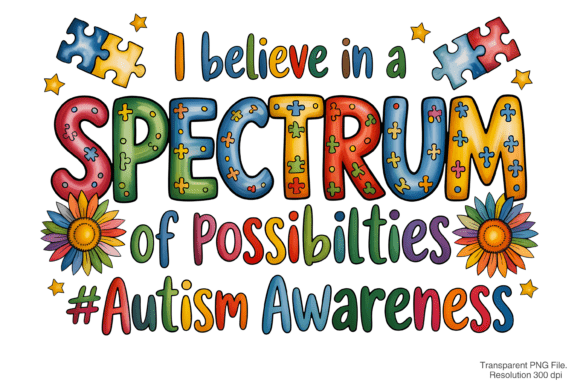
At its core, an Autism Awareness Spectrum PNG is a raster image file saved with a transparent background. Unlike JPEGs, which impose a solid white or colored box around the design, the PNG format allows the graphic to sit seamlessly on any surface color. This is particularly critical for autism awareness designs, which often utilize the infinity symbol or puzzle pieces in vibrant, multi-colored gradients representing the spectrum of neurodiversity.
The distinction lies in the quality of the transparency and the resolution. A premium file, such as one offered at 300 DPI (dots per inch) and sized at 12 × 12 inches, provides the density required for professional printing. Lower resolution files may appear crisp on a computer screen but often result in pixelation or "jagged" edges when printed on physical goods like t-shirts or mugs. When evaluating options, the clarity of the color transitions within the spectrum is also a key factor; a high-quality PNG will maintain smooth gradients without banding, ensuring the symbolic representation of the spectrum remains respectful and visually appealing.
Comparing Formats: PNG vs. Vector and Clipart
One of the most common decision points for creators is choosing between a PNG, a vector file (SVG/EPS), or standard clipart. Each format serves different purposes, and understanding these trade-offs is vital for project success.
- PNG (Raster): Best for users who need a "ready-to-use" image without specialized design software. If you are using platforms like Canva, basic photo editors, or sublimation software that handles layers simply, a high-resolution PNG is often the most efficient choice. It preserves complex effects like shadows, glitters, or intricate color blends that can sometimes be difficult to edit in vector formats.
- Vector (SVG/EPS): Ideal for large-scale signage or if you need to drastically alter the shape of the design. Vectors are infinitely scalable without quality loss. However, they require vector editing software (like Adobe Illustrator or Inkscape) and a steeper learning curve to manipulate correctly.
- Standard Clipart/JPEG: Generally less suitable for professional merchandise. The lack of a transparent background means extra steps are required to remove the backdrop, which can degrade image quality and leave unwanted artifacts around the edges of your design.
For the majority of sublimation projects, heat transfers, and direct-to-garment printing, a 300 DPI PNG strikes the best balance between ease of use and print fidelity. It eliminates the need for complex tracing or background removal while ensuring the output is sharp.
Evaluating Use Cases: Where This Format Excels
The versatility of a transparent background PNG makes it a cornerstone for various product categories. When assessing if this asset fits your workflow, consider the specific medium you intend to use.
Apparel and Textiles
For trendy t-shirts and hoodies, the PNG format is highly effective. Whether you are using heat transfer vinyl (HTV) printers or sublimation, the clean edges of a premium PNG ensure that the design does not have a visible "box" around it. The 12 × 12-inch dimension mentioned in many premium listings is particularly useful here, as it covers the standard printable area for adult chest logos without requiring upscaling, which can compromise quality.
Hard Surfaces and Sublimation
Tumblers, mugs, and tote bags often involve curved surfaces or textured fabrics. A high-resolution file ensures that the colors remain vibrant even when stretched slightly during the wrapping process of sublimation. The transparency allows the natural color of the mug or the fabric weave of the tote bag to show through where intended, creating a more integrated and professional look compared to opaque stickers.
Digital and Paper Crafts
Beyond physical products, these files are excellent for greeting cards, invitations, and digital wall art. Because the background is transparent, you can layer the spectrum graphic over patterned papers or textured digital backgrounds without obscuring the underlying design. This flexibility is crucial for creating unique, layered compositions for home décor or event stationery.
Decision Factors: Is This the Right Choice for You?
While a premium Autism Awareness Spectrum PNG is a powerful resource, it is not the only solution for every scenario. Making an informed decision involves weighing your technical skills, equipment, and end goals.
Choose a High-Resolution PNG if:
- You prioritize speed and efficiency in your workflow.
- You do not have access to advanced vector editing software.
- Your final product size fits within the 12 × 12-inch limit (or requires only minor scaling).
- You need complex color effects, such as watercolor textures or metallic gradients, which are native to raster images.
Consider Alternatives if:
- You plan to print banners or signage larger than 24 inches, where a vector file would prevent any potential pixelation.
- You need to deconstruct the design entirely, changing individual puzzle pieces or infinity loop segments independently (though some PNGs come with layered elements, vectors offer more geometric control).
- You are working with extremely limited bandwidth or storage, though modern PNGs are generally well-optimized.
Technical Considerations for Professional Results
Even with a premium file, the final output depends on how the asset is handled. A common pitfall is ignoring color profiles. As noted in product descriptions, colors may vary slightly due to monitor and printer settings. This is a universal challenge in digital design. To mitigate this, professionals recommend calibrating monitors and performing test prints on the actual material you intend to use. A design that looks vibrant on an RGB screen may appear duller on a CMYK printer unless managed correctly.
Furthermore, the "instant download" nature of these digital products means there is no physical proofing stage before purchase. It is advisable to review the seller's portfolio for consistency in style. Look for examples of their work on actual products—such as photos of the design on a real t-shirt or mug—rather than just digital mockups. This provides a realistic expectation of how the clean, vibrant design quality translates to the physical world.
Maximizing Value for Small Businesses and Creators
For those running small businesses or engaging in serious DIY crafts, the licensing terms are as important as the visual quality. Most premium PNGs intended for commercial use allow for unlimited physical product sales, which is a significant advantage over subscription-based stock sites that may restrict the number of copies you can sell. Before integrating an Autism Awareness Spectrum PNG into your product line, verify that the license covers "commercial projects" explicitly.
Additionally, the reusability of a single high-quality file across multiple product types—from stickers to wall art—maximizes the return on investment. Instead of purchasing separate designs for a mug and a tote bag, one versatile PNG can serve both purposes, maintaining brand consistency across your inventory.
Final Thoughts on Selection
Selecting the right graphic asset is a blend of artistic preference and technical requirement. An Autism Awareness Spectrum PNG offers a practical, high-fidelity solution for a wide range of creative endeavors. By focusing on resolution, transparency quality, and compatibility with your specific printing methods, you can ensure that your final products honor the message of neurodiversity with the professionalism it deserves. Whether you are creating a single gift or launching a product line, understanding these nuances empowers you to make choices that yield durable, beautiful, and meaningful results.