Maximizing Your Mardi Gras Faux Yarn Coquette Bow PNG for Professional Results
The coquette bow trend has taken the crafting world by storm, evolving from a simple ribbon accent into a dominant aesthetic across fashion and home décor. When you combine this viral style with the vibrant, textured look of faux yarn and the festive spirit of Mardi Gras, you get a design element that is both timely and timeless. A Mardi Gras Faux Yarn Coquette Bow PNG offers creators a shortcut to high-quality visuals without the need for complex photography or manual illustration. However, simply downloading a file and slapping it onto a product does not guarantee success. Many creators, from hobbyists to small business owners, overlook critical details regarding file usage, resolution, and application methods, leading to disappointing results that can hurt their brand reputation or waste valuable materials.
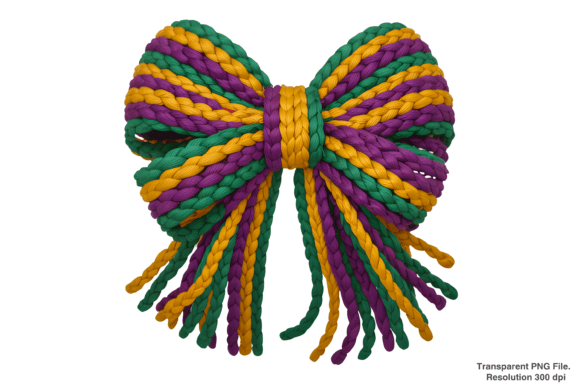
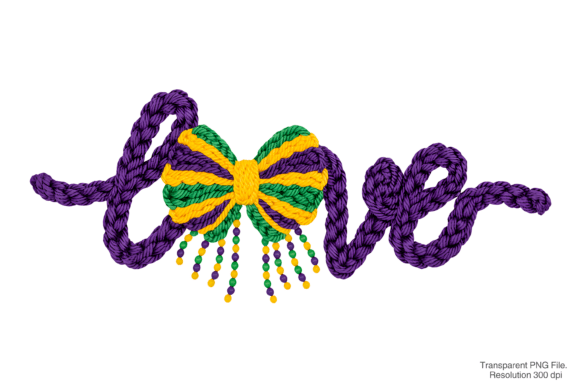
Understanding exactly what you are working with is the first step toward avoiding common pitfalls. This specific digital asset features a bow designed to mimic the chunky, soft texture of yarn, colored in the traditional purple, green, and gold of Mardi Gras. The "faux yarn" aspect provides a tactile visual depth that flat vector graphics often lack, making it ideal for sublimation, direct-to-garment (DTG) printing, and sticker production. Yet, the convenience of a ready-for-instant-download file can sometimes lead users to skip essential preparation steps. One of the most frequent mistakes involves ignoring the specific dimensions and DPI (dots per inch) requirements of the final product. While a 12 × 12 inch file at 300 DPI is considered high-resolution and suitable for most standard applications, scaling it up significantly for large-format wall art or down for tiny jewelry tags without checking the pixel density can result in blurry or pixelated output.
Avoiding Resolution and Scaling Errors
A prevalent misunderstanding in the digital crafting community is assuming that all PNG files behave the same way regardless of size. When you purchase a premium PNG file, you are buying a raster image, which is made of pixels. Unlike vector files (SVG or EPS) that can be scaled infinitely without quality loss, raster images have a fixed limit. If you attempt to stretch a 12-inch design to cover a full-sized blanket or a large banner, the software must invent new pixels, leading to a loss of sharpness. This is particularly damaging for a design relying on the "faux yarn" texture; if the resolution drops, those intricate fiber details turn into muddy blobs, stripping the design of its charm.
To avoid this, always check your printer's or manufacturer's specific DPI requirements before resizing. For items like tumblers and mugs, the standard 300 DPI included in this download is usually perfect. However, if you are creating a large tote bag or wall art, verify if the 12-inch dimension meets the physical size needs of your project. If you need a larger version, do not simply drag the corner of the image in your design software. Instead, look for listings that offer multiple size variations or consider using specialized upscaling software designed for print, though nothing beats starting with a file sized correctly for your intended use.
Color Management and Sublimation Realities
Another area where creators often face frustration is color discrepancy. You might design a beautiful shirt on your screen, only to receive a print where the Mardi Gras purple looks washed out or the gold appears brownish. This happens because monitors emit light (RGB color mode), while printers use ink or toner (CMYK or dye-sublimation processes). The note that "colors may vary slightly due to monitor and printer settings" is not just legal jargon; it is a crucial reality of physical production.
Sublimation, a popular method for applying these designs to hard goods like tumblers and mugs, is especially sensitive to color shifts. The heat transfer process can sometimes dull vibrant colors if the profile isn't managed correctly. To mitigate this, experienced professionals recommend printing a test strip on the actual substrate you plan to use before committing to a full production run. Adjust your printer settings to "vivid" or "photo" quality rather than "standard" to ensure the faux yarn texture pops. Additionally, ensure your design software is set to the correct color profile for your specific printer. Ignoring this step can lead to wasted blanks and unhappy customers who feel the product does not match the listing photos.
Software Compatibility and Layering Issues
While the listing states the file is compatible with most design software, users sometimes encounter issues when importing PNGs into programs like Cricut Design Space, Silhouette Studio, or Adobe Illustrator. A common error is treating the PNG as a cut file rather than a print file. Since this is a printed graphic with a transparent background, it is meant for "Print then Cut" projects or full-color printing, not for cutting out the shape of the bow itself unless you are making a sticker. Attempting to auto-trace a complex faux yarn texture for cutting often results in jagged edges and lost detail.
Furthermore, when layering this bow with other elements, such as text or additional graphics, pay close attention to the transparency. A high-quality PNG should have a clean edge with no white halo around the yarn fibers. If you notice a faint white outline when placing the bow over a dark-colored t-shirt mockup, it may indicate a poor export from the original designer or a blending mode issue in your software. Always zoom in to 200% or 300% to inspect the edges before sending the file to print. Using the "multiply" or "overlay" blend modes incorrectly can also alter the intended colors of the Mardi Gras theme, so stick to "normal" blending unless you are deliberately aiming for a specific artistic effect.
Commercial Use and Brand Consistency
For entrepreneurs and small business owners, the appeal of a Mardi Gras Faux Yarn Coquette Bow PNG lies in its ability to speed up product creation. However, relying too heavily on a single trending asset can dilute your brand identity. If every item in your shop uses the exact same bow placement and sizing, your store may look generic. The best approach is to use this asset as a component within a larger, unique design. Combine the bow with custom typography, different background patterns, or complementary graphics to create something distinct.
Additionally, clarify the licensing terms before selling. While many listings allow for commercial use on physical end products (like shirts and mugs), they often prohibit reselling the digital file itself or using it in a way that allows the customer to extract the image. Ensure you are adhering to these guidelines to avoid copyright strikes or account suspensions on platforms like Etsy or Amazon Merch. Remember, the value you provide to your customer is the finished product, not just the clipart.
Ultimately, the key to success with digital downloads is preparation and attention to detail. By respecting the limitations of raster files, managing color expectations, and understanding the technical requirements of your printing method, you can transform a simple download into a high-quality, profitable product. Take the time to test, measure, and refine your workflow. The difference between an amateur-looking item and a professional-grade product often comes down to these small but significant adjustments.